
When AI starts working in recruiting, a question soon comes up: who will watch it? The answer “a person” is not enough until that person has a name, tasks and the tools to carry them out.
Supervision is work, not a sentence in a presentation
AI in recruiting needs supervision by a person. That is easy to say. It is harder to point out who runs that supervision. The sentence “a person approves the decisions” does not say which person, when or on what basis.
Supervision that nobody has among their duties can end in two ways. The AI's proposals wait in a queue, because nobody feels responsible for them. Or someone approves them in batches, without reading them. In both cases a person is in the process in name only.
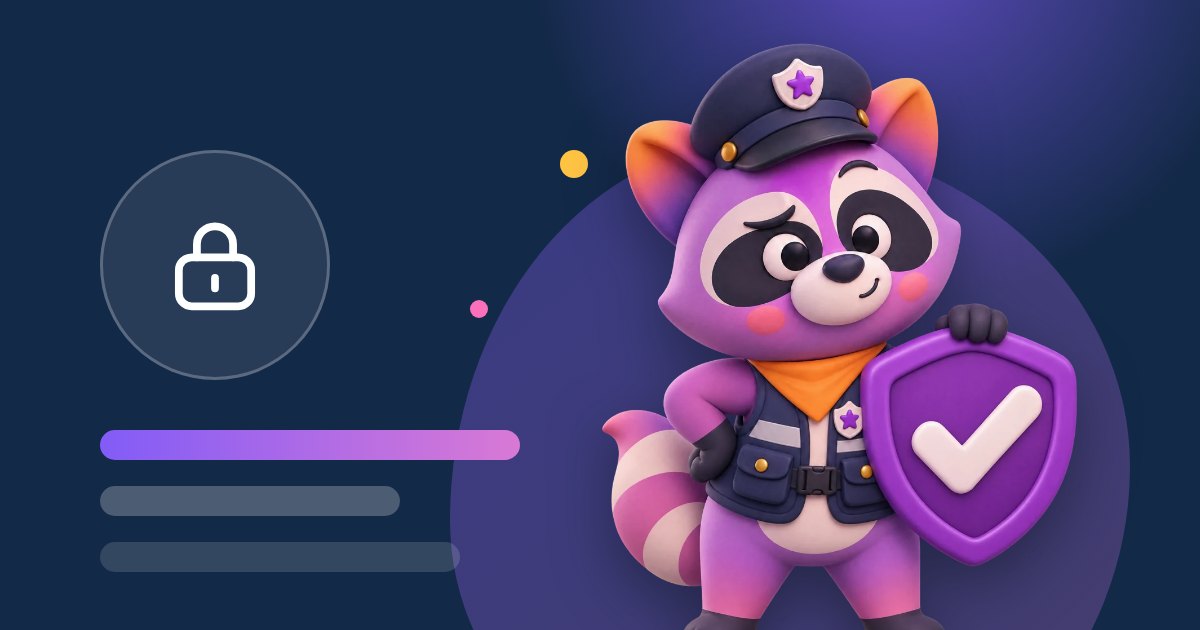
That is why, with us, supervision has a name: ReCops. It combines “recruitment operations” and “cops”, that is, police officers. ReCops is the person or the team that supervises the SmartyTalent virtual recruiter: they approve its proposals and are responsible for quality. The name itself matters less than the principle behind it. Supervision is separate work, and someone has to have it among their duties.
Four tasks of supervision
This is the scope of the work ReCops does. You can treat it as a checklist for any AI tool in recruiting, including one that is already running at your company.
Approving proposed rejections. The virtual recruiter presents a recommendation with a reason, and ReCops makes the decision. A rejection after a rating is a proposal that a person approves. A good supervisor reads the reason, not only the result.
Resolving unclear cases. When a rating is not clear-cut, a person decides. It is worth agreeing in advance who such cases go to. Otherwise they wait without an owner.
Watching over the quality of ratings. ReCops checks whether the ratings and the reasons keep to the requirements agreed with the manager. This question has to be asked regularly, not only when someone raises objections.
Watching over contact with candidates. When a candidate does not agree to a recorded call with an AI, a person calls them back. Someone has to know that this call is their task. We measure candidates' opinions with a survey and count complaints.
You can recognise supervision that works. A supervisor who reads the reasons sometimes disagrees with a proposal. If they approve everything for a long time without a single change, check whether the proposals are that good or whether simply nobody reads them.
What a tool has to show so that it can be supervised
A supervisor will check only what the tool shows them. Before you ask who supervises, check whether there is anything to supervise. In the virtual recruiter, four things serve this purpose.
- Reasons. Every rating has a reason and refers to the criteria of the position. The criteria come from a conversation with the manager about the real work in the position.
- History. The history of every decision stays in the system.
- Switches. Every stage has a switch: automatic, manual or off. A rejection after a rating waits for approval by a person.
- A clear limit to automation. Only one situation closes an application without a person: an answer in the form that does not meet a must-have requirement agreed with the manager. Such a decision can also be reversed. When a candidate does not reply by the set deadline, for example to an invitation to a test, the virtual recruiter proposes closing the application and a person approves it.
If a tool shows neither reasons nor history, supervision comes down to trust. Then neither a name nor a new position will help.
Who runs the supervision: two models
Supervision can be run by the vendor's team as a service or by trained people in your organisation. With us, this means the SmartyTalent ReCops team or a trained person from your team.
At the start, the SmartyTalent ReCops team runs the supervision. For six to eight weeks the virtual recruiter works in your recruitment system (ATS), and you receive the results and a weekly report. We do the ATS integration, the supervision and the reports. From you we need a workshop with the manager, which takes 60 minutes, and the decisions about candidates that you make today anyway.
The pilot covers two or three positions. We write down the success thresholds before the start, and the pilot can be stopped in one day. It is a good rule for any AI implementation: first agree how you will know that the work is good, and only then commission it.
Then one person from your team learns how to supervise: an hour or two a week, plus a training session that takes 90 minutes. This is time for learning, not a measure of the work of supervision itself. One ReCops supervises several virtual recruiters, and we measure the exact ratio for your positions in the pilot. You also receive from us the instructions for use and the training programme for supervisors.
At the end you decide what comes next.
- Supervision at your company. A trained person from your team approves the decisions and knows your positions best. We remain the second line of support.
- Supervision as a service. Our ReCops team continues to supervise the virtual recruiter, and you receive the results and a report.
In both models it is you who decide who to invite to the next stage and who to hire. When our team runs the supervision, it is our team that approves the proposed rejections after a rating, according to the requirements you accepted yourselves. Supervision run as a service does not relieve the employer of the duty to designate the people who carry out supervision.
What supervision does not change
In conversations with HR teams, one sentence comes up: “I do not want to become an AI operator”. It is an understandable concern, so it is worth separating two things: the work that AI takes over and the decisions that stay with people.
The virtual recruiter takes over the repetitive work that comes before a decision: reading CVs, making screening calls, arranging times and replying to candidates. Your role does not change. With the manager you agree who you are looking for, and you decide about candidates. We add a recruiter to your team.
You do not have to take on the supervision from the first day either. At the start our team runs it, and we train one person from your team only when you have seen the value.
To check at your company
- Who, by first name and surname, approves the proposed rejections prepared by AI?
- Does every rating have a reason that the supervisor can compare with the requirements of the position?
- What does the tool do automatically, and can such a decision be reversed?
- Who calls back a candidate who does not agree to a call with an AI?
- If the vendor runs the supervision, what report do you receive, and who at your company reads it?
Film (in Polish): “Who watches the virtual recruiter? The ReCops team”
AI can prepare a rating, a reason and a message, but someone has to check that work. Regardless of who runs the supervision, a person decides about candidates.